

Certified Nursing Services in Noida
Looking for a Trained Male or Female Nurse at Home? Get Professional Home Nursing Care, 24x7
HCAH deploys background-verified, NABH-accredited GNM, B.Sc. Nursing, and ICU-trained Nurses who deliver safe, compassionate, and clinically supervised care at home. Same-day nurse services available.
Comprehensive assessment
Constant training
Certified nursing care staff
Customised treatment plans
Continuous monitoring
Customer rating of 4.9/5
Nursing Services HCAH Provides at Home
Two levels of nursing care — matched to what the patient actually needs, not what is easiest to arrange.
General Nursing Care
GNM | BSc NursingBest for
- Post-surgical recovery
- Elderly chronic care
- Post-discharge patients
- Wound care
- Chronic illness management
Shift formats
Key Services Covered
- Vitals & Health Monitoring
- Medication & Injection Administration
- Wound, Tube & Catheter Care
- Respiratory Support & Nebulization
- Mobility & Rehabilitation Assistance
- Basic Life Support (BLS)
Critical Care/ICU Nursing
ICU-Trained | ACLS CertifiedBest for
- Ventilator-dependent patients
- ICU step-down
- Tracheostomy
- Oncology
- Complex post-surgical cases
Shift formats
Key Services Covered
- Ventilator & Respiratory Management
- Tracheostomy & Airway Care
- PICC Line, TPN & Infusion Management
- Advanced ICU Monitoring
- Dialysis & Stoma Care
- High-Risk Medication Administration
- Complex Critical Care Support
For patients in early or mid-stage recovery, general nursing is clinically sufficient and considerably more cost-effective than a prolonged hospital stay. For families facing the decision between extended ICU admission and a structured home-based alternative, HCAH’s critical care nurses provide the clinical depth to make that transition a credible option — not a compromise on the patient’s safety.
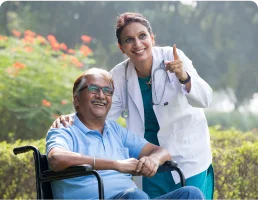
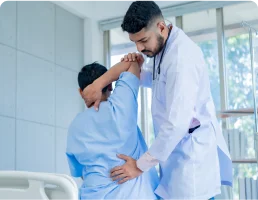
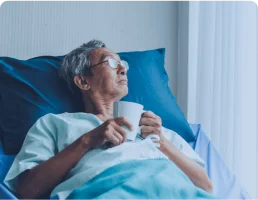
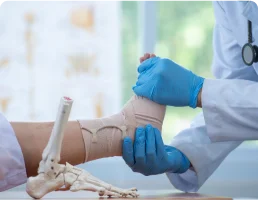
Conditions Our Nursing Team Supports at Home in Noida

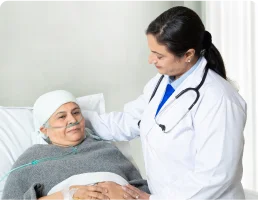

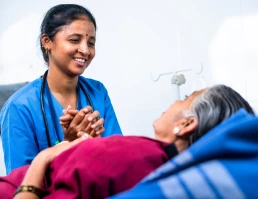
How HCAH Verifies Every Nurse
Every nurse deployed by HCAH completes a four-step safety verification process before they are eligible for patient assignments. This is not optional and is not abbreviated for urgent deployments.
Step 1 — Government ID and Biometric Registration
Aadhaar and PAN verification are completed alongside biometric registration, creating a documented identity record for every nurse in the HCAH network. Without this, no deployment proceeds.
Step 2 — Physical Home Verification
The nurse’s residential address is physically verified by HCAH’s team — not cross-checked against a document. This step confirms that the person being deployed is who they represent themselves to be.
Step 3 — Criminal Background Screening
A third-party criminal background check is conducted, covering court cases, active investigations, and registered legal complaints. It is completed before any nurse enters a patient’s home.
Step 4 — Clinical Competency Assessment
Theory evaluations, practical assessments, and ICU practitioner reviews confirm that the qualifications a nurse presents on paper match their actual clinical capability. A certificate alone does not clear this step.
3 Steps to Getting Excellent Nursing Services at Home
Your credible home nursing services are just a call away.
Why Noida Families Trust HCAH
Finding a home nursing provider shouldn't depend on informal recommendations alone. Noida families choose HCAH for verified nurses, transparent pricing, continuous clinical supervision, and NABH-accredited standards that ensure accountability throughout the care journey.
4-Step Nurse Verification
Every nurse completes government ID and biometric registration, physical address verification, third-party criminal background screening, and a clinical competency assessment before deployment—even for urgent care requests.
Clinical Supervision
A dedicated HCAH clinical supervisor monitors every active case throughout the care period, ensuring consistent clinical oversight and timely support.
24-Hour Nurse Replacement
If your assigned nurse is unable to continue, HCAH arranges a qualified replacement within 24 hours to help maintain uninterrupted patient care.
Insurance-Friendly Billing
Structured invoices and clinical documentation help families with applicable health insurance process eligible reimbursement claims more easily.
NABH-Accredited Care
Every home nursing service follows independently assessed NABH clinical governance standards, ensuring quality, safety, and professional accountability.
Transparent Pricing
Pricing is finalized after the clinical assessment, with no hidden charges or unexpected costs added after the initial quotation is shared.
Because there is no place like Home
We offer the best compassionate and personalized nursing services in the comfort of your home. Call us today.
- Care for a bed-ridden loved one
- Help for daily activities of a senior citizen
- Care for a loved one recovering from surgery
- Care for patients recovering from Stroke
- Focused care for road accident victims
Hear from the Healed
Overall rating

“My father had a stroke in January and was discharged after two weeks in the ICU. The HCAH nurse knew exactly what she was doing from the first morning. The daily vitals tracking gave us something we hadn’t had in weeks — a clear picture of whether h...
“After my mother’s hip replacement, the hospital discharged her in five days. The nurse HCAH sent was experienced with post-surgical patients and never once made us feel like we were managing this alone. Wound care every day — handled professionally ...
“My father is 79 with diabetes, blood pressure, and early Parkinson’s. The HCAH nurse manages his medication schedule, monitors his vitals, and flags anything that looks off. In six months, we haven’t had a single emergency hospitalisation.” ...
Trusted by leading hospitals
Areas HCAH Covers in Noida and Greater Noida
Areas HCAH Covers in Noida and Greater Noida
Starting Nursing Care on the Day of Discharge from a Noida Hospital
Nursing Care vs Patient Attendant Care — Understanding the Difference
Frequently Asked Questions
